A plain turtleneck can do much more than fill the gap beneath a jacket. Its uninterrupted front, close neckline and clean outline give an outfit a strong starting point. The trick is to make those qualities visible. If every layer is dark, bulky or buttoned up to the chin, even a beautiful knit can become background clothing.
Start by treating your turtleneck as the piece you want people to notice. Choose the neckline, jewellery and jacket around it, then let the rest of the outfit support that decision. You do not need a dramatic colour or a statement necklace: a deliberate collar fold and the right amount of space around the neck can be enough.
Get the neck and fit right first
Before adding anything, put the turtleneck on with the bra and trousers you intend to wear. Check the front, side and back in a mirror. A fine knit should follow your shape without pulling into horizontal lines across the chest. A roomier version should fall with intention, rather than bunching above the waistband.
The neck deserves its own adjustment. Fold a long collar once for a tidy, even edge, or gently scrunch a softer one if a precise fold feels stiff. Avoid repeatedly rolling it into a thick tube: that can crowd the jaw and make a delicate knit look unexpectedly heavy. Smooth the fabric at the shoulders after adjusting it.
If a full-height collar feels overwhelming, try a shorter, looser turtleneck next time you are choosing a knit. You can still create the same framed effect without fabric reaching high under your chin. Comfort matters here; a neckline you keep tugging will never feel like a confident focal point.
Create a frame around the neckline
Think of the turtleneck as a solid shape that needs a clear edge. An open jacket creates two vertical lines beside it, making the centre panel easy to see. A low, open cardigan does something similar, although a structured jacket gives a sharper contrast against a soft knit.
Look at where the outer layer’s neckline finishes. A blazer with lapels opening towards the waist reveals a generous stretch of knit. A jacket zipped halfway can create a smaller V-shaped window. Either works, but decide deliberately: a narrow sliver of fabric between two almost-closed edges rarely gives the turtleneck much presence.
You can also frame the neck without adding another collar. A collarless jacket leaves a clear boundary around the upper chest, while a sleeveless waistcoat exposes the shoulders and sleeves. If you choose a collared jacket, settle its collar away from the roll neck so the two are not competing for the same space.
Choose one job for your jewellery
Jewellery can draw attention upwards, break up a plain front or echo the shape of the collar. It works best when you pick one main job. Wearing large earrings, several necklaces and an elaborate brooch together can leave the knit looking like a display stand.
Use earrings to highlight the face and collar
Hoops, small drops or sculptural studs keep the chest clear while giving the neckline a considered finish. With a thick, high collar, check that dangling earrings do not catch in the wool when you turn your head. Pull your hair behind one ear to see how the earring and collar sit together before deciding whether you need anything else.
Let a necklace sit clearly above or below the fold
A necklace worn over a turtleneck needs enough room to settle. A short chain that lands directly on the collar’s lower fold can look trapped. Try a slightly longer length so it rests on the flat area beneath, or choose a longer pendant to create a vertical line down the front.
Keep the knit’s texture in mind. A fine chain can disappear against a chunky cable, whereas a smooth pendant has a clearer outline. On a fine-gauge knit, a simple chain may be all you need. Check clasps and settings for rough edges that could snag the fabric, and avoid heavy pieces that drag a lightweight neckline out of shape.
Make the jacket support the knit
The most useful jacket is not necessarily the most striking one. It is the one that leaves your turtleneck looking intentional when worn open. Try sitting down and moving your arms, too: lapels that collapse inward or sleeves that squeeze the knit can undo an otherwise good combination.
- With a blazer: pair a close-fitting turtleneck with a little room through the jacket’s shoulders and arms. Push the blazer sleeves back slightly if you want a narrow band of knit visible at the wrists.
- With a cropped jacket: let the shorter hem draw attention to the waist. Tuck a fine knit into high-waisted trousers, or allow a neat hem to meet the waistband without a bulky overlap.
- With a leather jacket: use the smooth surface to contrast with a soft knit. Leave the front open and keep scarves out of the neckline so the collar remains visible.
- With a long coat: check the outfit with the coat off as well. A good coat can frame the knit outdoors, but trousers, jewellery and shoes should still make it feel complete indoors.
Use colour and texture to give it presence
A turtleneck does not have to be bright to stand out. Cream beneath a charcoal jacket gives the centre of the outfit a clear outline. Chocolate against pale grey feels softer but still distinct. If you prefer an entirely black outfit, vary the surfaces: a ribbed knit, smooth jacket and fluid trousers create differences the eye can follow.
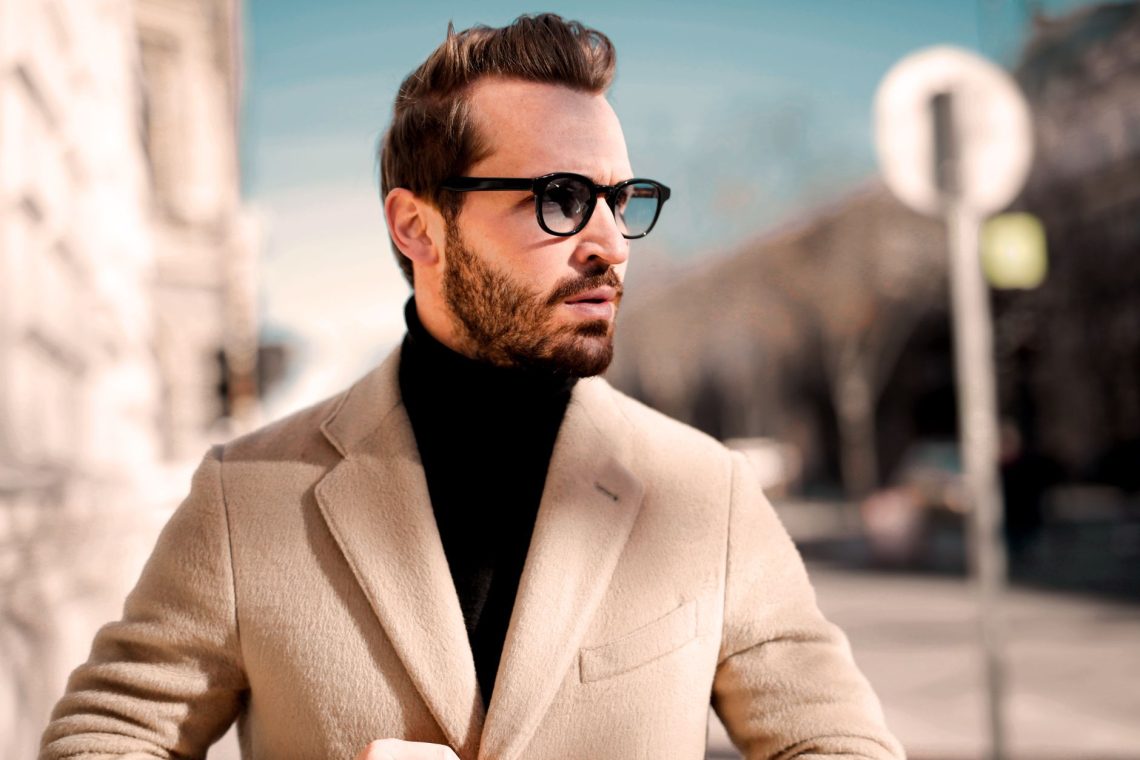
For a tonal outfit, separate the layers by a shade or texture. An oatmeal turtleneck under a camel blazer can look beautifully considered, especially when the knit’s neckline is visible above the lapels. Keep nearby accessories restrained so the subtle colour relationship remains easy to read.
If your turtleneck is the strongest colour, repeat it sparingly elsewhere, perhaps in a patterned scarf tied to a bag. There is no need to match every accessory. A single clear block of burgundy, green or blue can hold the outfit together on its own.
Balance the lower half
Once the neck and jacket are working, look at the overall silhouette. A fitted turtleneck offers a useful counterpoint to wide-leg trousers or a full midi skirt. A relaxed, thicker knit often benefits from a straighter lower half, although a generous all-over shape can work when hems and sleeves look deliberate.
Tucking is a tool, not a requirement. Fully tuck a fine knit when you want a clean waistline, then lift your arms and let a little fabric release naturally. With a thick knit, try leaving it untucked over a smooth waistband. Forcing too much wool into trousers usually creates a ridge that distracts from the neckline.
Try these three outfit formulas
- For a working day: wear a cream fine-knit turtleneck with charcoal tailored trousers, an open navy blazer and small gold hoops. The pale centre stays visible between the lapels; loafers finish the outfit simply.
- For a relaxed afternoon: combine a chocolate ribbed turtleneck with straight-leg blue jeans and a cropped ecru jacket. Add ankle boots and leave the jacket open to show the knit’s texture and waistline.
- For an evening out: pair a black turtleneck with a fluid midi skirt and an open tailored jacket. Choose sculptural earrings or a pendant, then check that your chosen jewellery has a clear outline against the knit.
Before leaving, take one final look with your arms relaxed. Can you see the shape of the collar, a clear panel of knit and the jewellery you chose? Adjust the jacket opening or remove one competing accessory if necessary. A plain turtleneck becomes the centre of an outfit when its shape has room to speak.