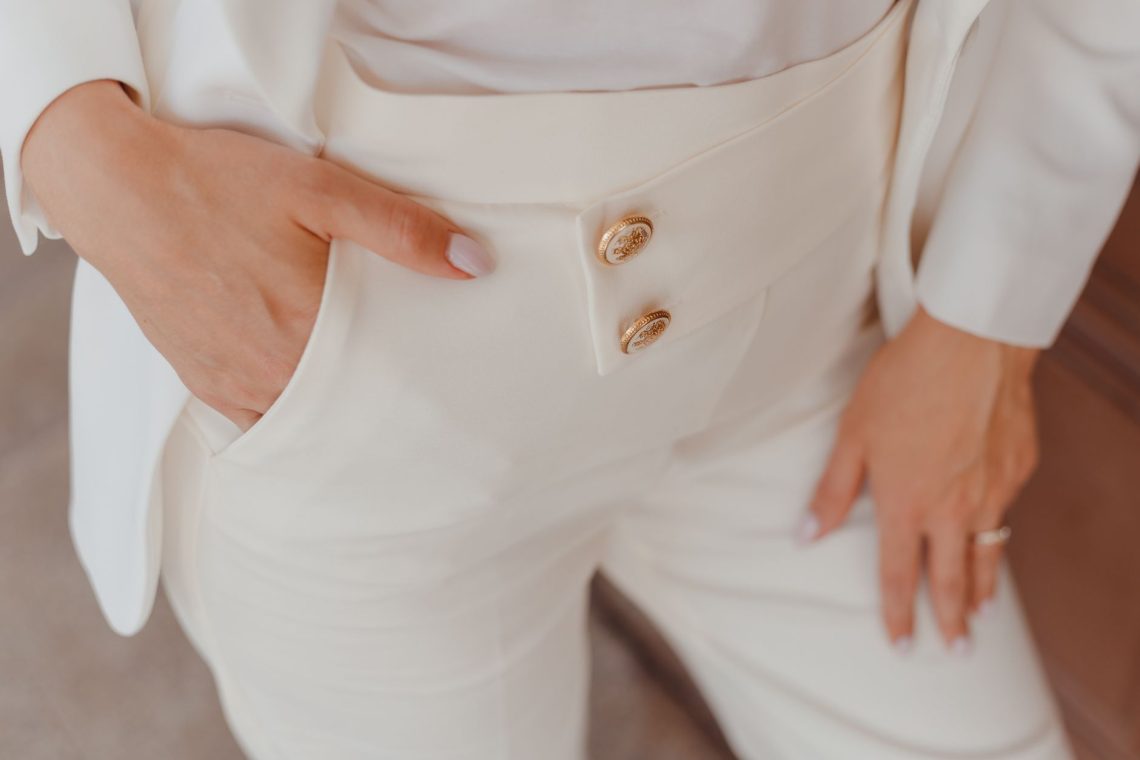
Trouser pockets should be useful without becoming the first thing you notice about an outfit. Yet a pair that looks smooth on the hanger can develop little wings at the hips as soon as you put it on. You smooth them down, they spring back, and a neatly tucked shirt suddenly draws attention to the very area you wanted to keep simple.
Gaping pockets are usually a clue about fit, pocket construction or what is sitting inside them. They are not a verdict on your shape. Before you size up, stitch them shut or abandon the trousers, work out what is pulling the opening away from your body.
Start with empty pockets and a proper try-on
Take everything out, including your phone, keys and any folded tissues. Check that the pocket bags are lying flat inside the trousers rather than folded or bunched. If the pair is new, look for temporary stitching holding the pocket closed; remove it carefully only once you have decided to keep the trousers.
Put on the underwear and top you would normally wear with them. A thick shirt tucked into an already snug waistband can change how the whole upper section sits. Fasten the trousers, walk around, sit down and stand up again. Then look at the front and side in a mirror without pulling the waistband into a more flattering position.
Notice when the opening lifts. Does it gape while you stand still, only when you sit, or only after walking? A pocket that opens briefly as you move is doing something different from one that stays stretched into a triangle.
Read the fabric around the pocket
Pulling across the hips
If the pocket edges flare alongside horizontal tension lines across the front, the trousers may need more room through the hips or upper thighs. The pocket opening interrupts the fabric, so strain can show there before it becomes obvious elsewhere. A zip that looks pulled sideways or side seams that drift forwards can provide further clues.
Try the next size as a comparison, even if the waistband becomes loose. If the pockets settle and the creases ease, you have useful evidence: more room below the waist may help. A waistband can sometimes be taken in, whereas adding room depends on how much spare fabric is inside the seams.
A waistband that will not stay put
Loose trousers can gape too. If the waist slips down, the upper part may settle at a wider point on your hips, changing the angle of the pocket. You might keep hitching the trousers up, only for the openings to flare again a few minutes later.
Hold the waistband gently at the height where it is meant to sit. If that improves the pockets, investigate the waist fit before changing the pockets themselves. A belt may help with a small amount of looseness, but tightening one until the fabric gathers creates another fit problem.
A rise or cut that does not suit you
The rise is the section between the crotch and waistband. When its length or shaping does not work for your proportions, the trousers can pull even when the waist measurement seems right. Look for a waistband being dragged down, discomfort when sitting or persistent creasing around the crotch.
Rather than endlessly changing sizes, compare a different cut. More room through the seat, a different rise or a fuller upper leg may allow the trousers to hang more comfortably. The label size alone cannot tell you whether that particular pattern suits you.
Check the pocket design
Slanted front pockets have an exposed diagonal edge that can lift away from the body under tension. Side-seam pockets can open when the seam is pulled apart. Neither design is automatically wrong, but two pairs with similar measurements may behave differently because their pocket openings sit at different angles.
For your next pair, compare slanted pockets with a more upright opening or a curved, jeans-style pocket. Try each while sitting as well as standing. If you like a smooth front, flat-front trousers with discreet openings may be worth exploring, but check the fit rather than assuming a particular style will solve everything.
Fabric matters too. A soft, fluid cloth can reveal the shape of a bulky pocket bag, while a firmer fabric may hold an opening more distinctly away from the body. Stretch does not guarantee a smooth result: fabric can stretch across the hips while the pocket edge remains under strain.
Try these simple adjustments first
- Flatten the pocket bags. Reach inside and ease each bag down into place. After washing, check that the lining has not twisted or caught around another garment.
- Reduce what you carry. Move a heavy phone or a bunch of keys into a bag. If the opening settles immediately, the contents were contributing to the problem.
- Check your tuck. Spread a tucked shirt evenly rather than leaving a thick fold beside one pocket. Try a thinner top to see whether the extra bulk is affecting the fit.
- Let the trousers sit naturally. Avoid forcing a mid-rise pair up to your waist or pushing a higher rise down onto your hips. Try another rise if their intended position feels uncomfortable.
- Press with care. Follow the care label, use a pressing cloth where appropriate and smooth the pocket bags first. Pressing can tidy a turned edge, but it cannot supply missing room.
Change one thing at a time. That makes it easier to distinguish a useful adjustment from a temporary improvement caused by standing very still.
What a tailor may be able to change
Take the trousers to a tailor while wearing the sort of outfit you plan to wear with them. Explain when the pockets gape and demonstrate by sitting or walking. Ask them to assess the whole upper section before simply stitching down the edges.
If the waist is too loose but the hips fit comfortably, taking in the waist may help the trousers stay in position. If they are tight through the hips, letting out a seam may be possible, but only if enough seam allowance is available. The tailor will need to check the construction and how the alteration affects the pockets.
A stretched pocket edge may need stabilising or reshaping. A pocket bag that catches or bunches may need adjusting inside. These are different jobs from changing the overall fit, so a clear diagnosis matters more than asking for a particular fix.
Closing the pockets is another option if you never use them and the trousers otherwise fit well. Ask for a finish appropriate to the fabric and opening. Stitching a strained pocket shut does not remove the strain; it may simply shift the pulling elsewhere. Agree on whether you want to lose that pocket’s function before any work begins.
Know when to choose another pair
It is worth moving on if the trousers only look right when you hold your breath, pose carefully or avoid sitting. Likewise, a pair needing changes to the waist, rise, hips and pockets may be a less practical purchase than a different cut that already feels comfortable.
When shopping, give yourself a short fitting-room routine: empty the pockets, check the waistband, look for pulling, sit down and walk a few steps. Compare cuts as well as sizes. Aim for pockets that lie reasonably close while allowing you to move, rather than an unnaturally rigid front. The best result is a pair you can get dressed in and then stop adjusting.