Trainers and tailored trousers can make a useful everyday pairing: comfortable enough for a busy day, with enough structure to feel dressed. Yet a combination that looks effortless on someone else can seem oddly incomplete in the mirror. Often, the problem is at the ankle. A hem that gathers over the shoe, a stray strip of sock or too much exposed leg can interrupt an otherwise considered outfit.
You do not need a new wardrobe to put this right. Start with the trainers you want to wear, look at where the trousers meet them, then choose socks that make that meeting point feel deliberate. Here is how to get the proportions working together.
Start with the trainers, then check the hem
Choose your shoes before deciding whether a pair of trousers needs shortening. Trainers have different heights, shapes and sole depths, so a hem that sits neatly over a slim leather pair might catch on the padded collar of a running-style shoe. Try the whole combination on, rather than assessing your trousers barefoot.
Stand naturally in front of a full-length mirror. Then walk a few steps, turn sideways and sit down. You are checking whether the hems fall back into place after moving, whether fabric collects across the front of the shoe and how much sock appears when your knees bend.
A clean line matters more than a particular measurement. The trousers should hang as intended, and the trainers should look like part of the outfit. If you keep tugging the hem down or rearranging it around the tongue, the length or trouser opening needs attention.
Understand the trouser break
The break is the fold created when the trouser hem meets the top of your shoe. It is a small detail with a considerable effect: little or no break gives a sharper outline, while more fabric resting on the shoe makes the finish softer and fuller.
No break: a clear, crisp finish
With no break, the front of the trouser leg falls straight without folding onto the trainer. Depending on the cut and shoe, the hem may just meet the upper or finish slightly above it. This works particularly well with tapered trousers and slim, low-profile trainers because you can see the shape of both.
Do not confuse no break with a pronounced crop. You can achieve a clean hem without showing a large section of ankle. If the trousers look too short whenever you move, try a slightly longer length or socks that continue the colour of the trouser leg.
A slight break: a softer everyday option
A slight break creates one shallow fold where the front hem touches the shoe. It is a useful starting point for straight-leg trousers, particularly if you prefer some coverage over the trainer. The fabric should settle lightly rather than bunch into several creases.
Check the back as well as the front. A tidy front does not rescue a hem that folds underneath itself at the heel. If the trousers are catching, ask a tailor to assess them while you are wearing the intended trainers.
A fuller break: make room for it
Longer, wider trousers can sit over trainers with a fuller break, but the volume needs space. A narrow hem pushed down onto a substantial shoe usually gathers at the ankle. A wider opening allows the cloth to fall around the upper more freely. Keep the hem clear of the ground and avoid loose fabric slipping under your heel.
Match the length to the trouser shape
Tapered trousers
A tapered leg draws attention towards the ankle, so excess length is especially noticeable. Begin with a hem that just meets the trainer or sits a little above it. If the opening grips the shoe collar, taking more length off may expose too much leg without solving the underlying shape problem. A slightly roomier hem may be the better alteration.
Straight-leg trousers
Straight trousers give you more flexibility. A near-full length with a slight break feels relaxed but considered; a shorter, unbroken line makes the trainers more visible. Look for a continuous fall from knee to hem. If the lower leg collapses into a stack of folds, try a shorter length before changing the rest of the outfit.
Wide-leg trousers
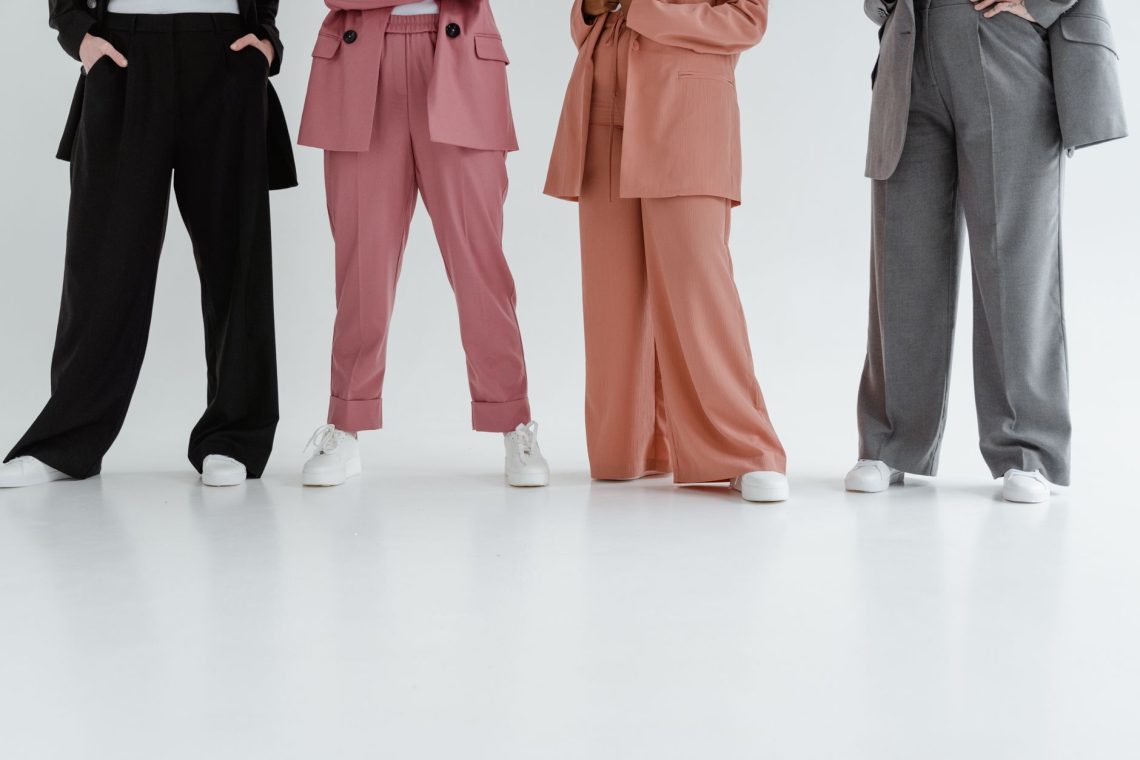
Wide tailoring often looks balanced when the hem covers part of the trainer, leaving the toe and some sole visible as you move. There should still be enough clearance to walk without stepping on the fabric. A substantial trainer can support the visual weight of a wide leg, although a simple, flatter shoe can also work when the hem falls cleanly.
Very cropped wide trousers create a different silhouette: the ankle becomes a clear gap between two broad shapes. If that gap looks abrupt, try a longer hem or a close-fitting sock in a related colour to connect the trousers and shoes.
Choose socks that complete the line
Socks are visible whenever you sit, climb stairs or cross your legs, even when they disappear while standing. Treat them as part of the outfit from the beginning.
- For a continuous line: choose socks close to the trouser colour. Charcoal trousers with charcoal socks keep the eye moving down the leg, even above a contrasting trainer.
- For a lighter finish: use concealed socks with a modest ankle gap. Make sure they stay hidden inside your particular shoes; a small edge peeping above the collar can look accidental.
- For a visible sock: choose a pair with enough length to stay above the trouser hem when seated. A plain ribbed sock gives the gap a clear, intentional texture.
White socks can work with white trainers, particularly in a more casual outfit, but check how strongly they contrast with dark trousers. If the white band becomes the first thing you notice, use a darker sock or reduce the gap with a longer hem.
Also consider weight. A fine sock sits comfortably inside a slim trainer and suits lighter tailoring. A thicker rib can look at home with heavier trousers and a chunkier shoe, provided it does not make the shoe feel tight. Avoid socks that slump into a ridge immediately above the collar.
Use a turn-up as a useful trial
A small turn-up lets you test a shorter length before committing to an alteration. Fold both legs evenly, then step back and assess the whole outfit. This is useful when you are deciding between a slight break and no break.
However, repeated rolls create bulk, especially in heavier fabric or a tapered leg. If you need several folds to reach the right point, have the trousers shortened properly. With wide trousers, a bulky turn-up can also interrupt the drape. A pressed, altered hem will usually give a more settled finish.
Keep the rest of the outfit considered
Once the ankle area works, bring a little structure into the upper half. A shirt tucked into the waistband, a neat knit or a blazer can make the trainer choice feel connected to the tailoring. This need not mean dressing formally: a plain T-shirt with a defined trouser waist can be enough.
Finally, check the shoes themselves. Remove surface dirt, straighten the tongues and tie the laces neatly. Then take one last look while standing and seated. If the hems fall cleanly, the socks look deliberate and nothing catches as you walk, the outfit has the finish it needs.