A diary can make a small shoe collection feel surprisingly inadequate. There is the office day that ends with dinner, a weekend lunch involving a long walk, and an invitation whose dress code offers very little help. The answer is not necessarily another pair. It is a clearer idea of what each pair already does.
A neutral shoe line-up works best when it covers different jobs, rather than repeating one favourite shape in several shades. Neutral does not have to mean beige, either. Black, brown, navy, grey, cream and shades close to your skin tone can all earn their place. The aim is a compact edit that makes getting dressed easier, while leaving room for your own style.
Start with your real week
Before thinking about colours, look at where you actually go. Someone who walks to a relaxed office needs a different balance from someone who drives to a workplace with a formal dress code. Include the less glamorous details: station steps, wet pavements, standing at receptions and the walk home after dinner.
Pull out the shoes you wear regularly and give each a job. You might have a weekday flat, a casual trainer and an occasion heel. Then identify the invitations that cause difficulty. If every wedding prompts a search for shoes you can manage on grass, that is a useful gap. If you already have three black heels but struggle with Saturday errands, another dressy pair will not solve much.
- Work: consider the dress code, commute and amount of time spent standing.
- Weekends: allow for walking, weather and the clothes you reach for most.
- Events: think about venue, surface and formality, as well as the outfit.
Choose a neutral palette from your clothes
Open your wardrobe and notice the colours that repeat. Black shoes are an easy starting point if you wear charcoal trousers, black dresses and darker denim. Brown or tan may feel more natural alongside camel, olive, cream and warm blue. Navy can be useful if black looks too stark with your favourite clothes.
You do not need every pair to be the same colour. A dark neutral can anchor workwear and evening outfits, while a lighter neutral gives softer clothes a less heavy finish. Start with those two roles and add a third shade only if it answers a clear need.
If you want a shoe that blends with bare legs, judge the colour against your own skin rather than a label saying “nude”. Look at the undertone as well as the depth: pinkish beige, golden tan and deep brown create quite different effects. Blending is an option, though, not a requirement. A contrasting shoe can look equally deliberate.
Build around a few distinct jobs
A polished everyday flat
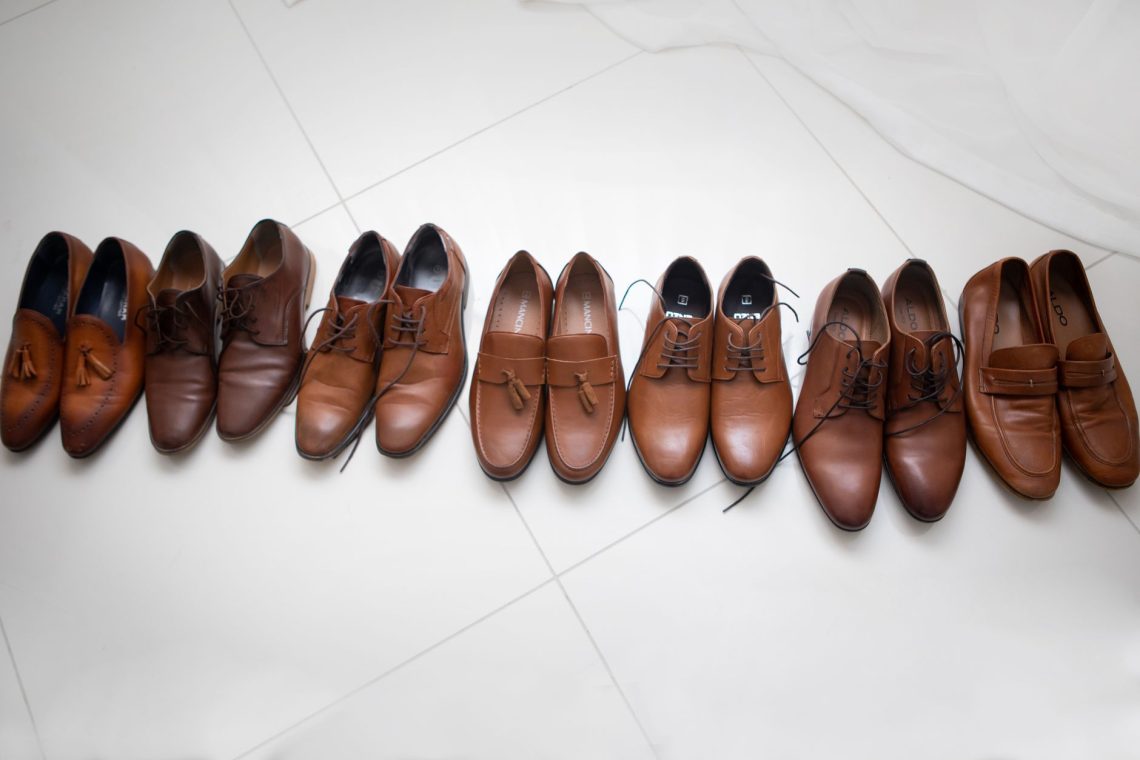
A loafer, a simple lace-up or a structured ballet flat can bridge work and a casual dinner. Choose the shape that sits comfortably with your usual trouser hems and skirts. A loafer gives a little visual weight to straight trousers; a lower-cut flat leaves more of the foot visible beneath a midi skirt.
Keep the details restrained if versatility matters. A clean upper and modest hardware are easier to move between settings than a strongly decorative finish. Try the pair with your actual work clothes, including socks or tights where relevant. A shoe that only works with one carefully arranged outfit is not doing the everyday job.
A simple casual shoe
A low-profile trainer in cream, white, grey or another wardrobe neutral can handle relaxed days without making every outfit feel sporty. The precise shade matters less than its relationship with your clothes. Cream may sit softly with oatmeal knitwear, while grey can work neatly with cooler colours.
Choose a pair you are willing to maintain. Light trainers show marks, so they are less useful if you dislike cleaning them. If trainers do not suit your style, a casual lace-up can fill this space. This is a role to cover, not a rule about owning a particular shoe.
A weather-ready option
A plain ankle boot is often a useful partner to the everyday flat. Check the sole, fastening and upper material against the conditions you expect it to face; a boot shape alone does not make a shoe suitable for rain. Leave room for the socks you intend to wear.
The shaft should also work with your hems. Try it under full-length trousers and beside cropped ones, rather than assuming it will suit both. If your life rarely calls for boots, a practical closed shoe may cover this job instead.
An occasion shoe you can actually wear
For dinners, weddings and smarter invitations, choose the level of formality your diary requires. A refined flat, a low block heel or a simple court shoe can each make sense. You do not need a high heel to finish a dressy outfit: a slim shape, elegant material or subtle metallic detail can provide enough distinction.
Think beyond the photograph. A garden venue raises different questions from a restaurant, and a standing reception asks more of your shoes than a seated meal. Check that straps hold the foot securely and that your toes have space. If a pair feels uncomfortable during a brief indoor try-on, do not build an event outfit around hoping it will improve.
Make the shoes work with your outfits
Once you have candidates, make a small outfit check at home. Wear each pair with work trousers, jeans, a skirt or dress, and whatever you would choose for dinner. Look at the whole silhouette in a mirror. Notice whether a hem catches on a boot, whether a bulky sole overwhelms a delicate skirt, or whether a dark shoe provides a welcome anchor.
There is no need for every shoe to suit every outfit. What matters is useful overlap. Your polished flat might cover the office, lunch and an informal evening; your occasion pair might work with both tailored trousers and a dress. If two pairs serve exactly the same outfits and conditions, you may only need your favourite.
Small styling adjustments can broaden the edit. Turn up jeans to clear a loafer, try tonal socks with trousers, or repeat a shoe colour in a belt. Avoid making an exact bag-and-shoe match compulsory. A shared level of formality often creates enough connection.
Read the invitation before choosing the pair
Neutral colour does not cancel a dress code. A pale trainer remains casual, while a black satin shoe may feel distinctly evening. Read any stated requirements first, then consider the venue and the rest of your outfit. For a formal occasion, assess the shoe’s shape, material and condition together.
For invitations with little guidance, start with what you know: time of day, setting and planned activity. A smart flat may be ideal for a restaurant lunch but less practical for a walk beforehand. Choosing around the actual day is more useful than treating every invitation as a reason to dress from the feet upwards.
Keep the edit ready to leave the house
A small collection depends on care. Follow the material’s care instructions, remove everyday dirt promptly and let damp shoes dry naturally away from direct heat. Check soles, heel tips and fastenings before an important outing, leaving time for repairs where needed.
Keep occasion shoes somewhere accessible and try them on before the event with the hosiery you plan to wear. Replace a pair when its role can no longer be covered comfortably or reliably. Over time, your line-up may change with your work, clothes or social life. That is the point of a considered edit: it follows the invitations you actually accept.