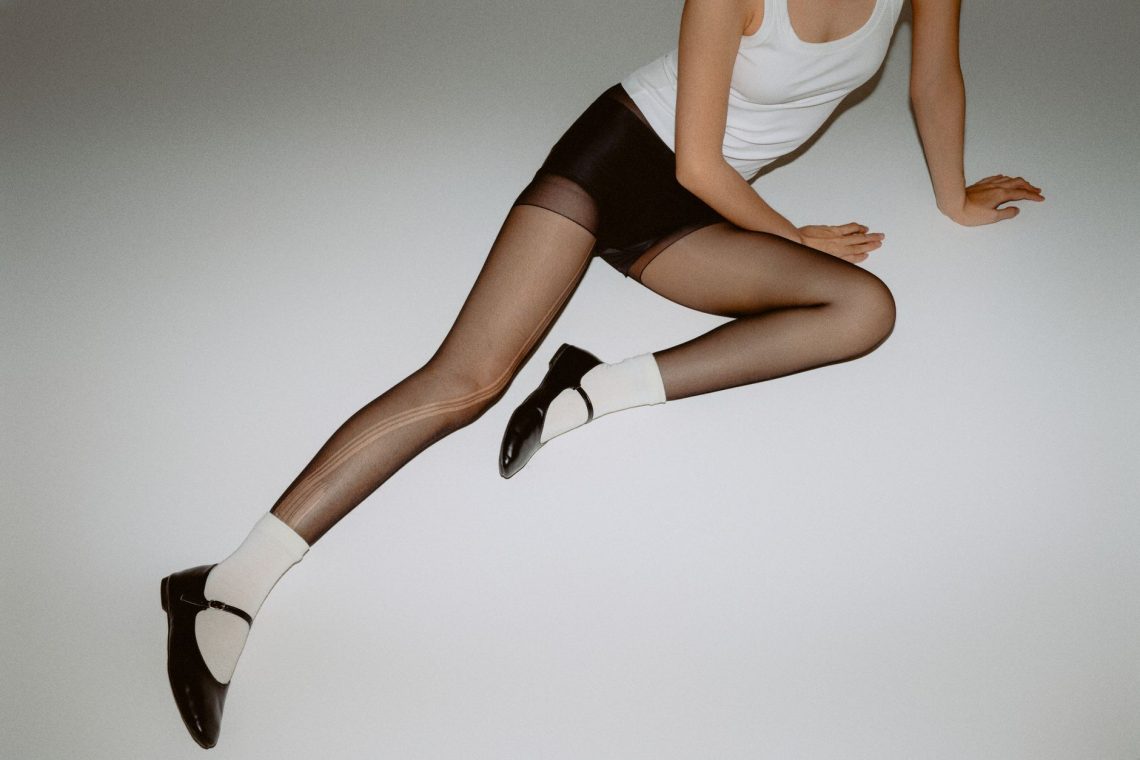
There is a particular frustration in putting together an outfit, then discovering that your tights sag at the knees or your socks disappear beneath your heels. Hosiery may be a small part of a wardrobe, but it affects how shoes feel, how clothes sit and whether you spend the day adjusting something. Buying fewer but better pairs starts with paying attention to those everyday details.
Better does not automatically mean more expensive. It means suitable for your feet, your clothes and the way you actually live. A well-chosen pair that gets worn, washed carefully and stored properly can be more useful than a drawer full of almost-right alternatives. Here is how to make that choice with fit, fabric and care in mind.
Start with the pairs you reach for
Before buying anything, empty your hosiery drawer and separate the pairs you wear from those you avoid. Notice why certain socks stay at the back: perhaps the seam rubs, the cuff digs in or the colour works with nothing you own. With tights, look for recurring problems such as a waistband that rolls or toes that feel cramped.
Use that small audit to make a specific shopping list. You might need smooth socks for loafers, longer pairs for ankle boots and opaque tights for work skirts. Buying for those jobs is more reliable than choosing an appealing multipack and hoping it will fit into your wardrobe.
- Keep comfortable, sound pairs together where you can find them.
- Set aside pieces that need a small repair.
- Note the size, fabric blend and style of favourites before their labels become unreadable.
- Avoid replacing everything at once; fill the gaps that affect your daily outfits first.
Make fit your first quality check
For socks, check the heel and cuff
A sock’s heel should sit around your heel, rather than bunching beneath your foot or creeping towards your ankle. Excess fabric can fold inside a shoe, while a pair that is too short may pull against the toes. If you sit between size ranges, check the brand’s guidance instead of assuming every medium fits alike.
The cuff should hold without feeling restrictive. Think about length as well: a short sock that works with trainers may slip below the edge of a boot. Try new socks with the shoes you intend to wear, keeping any return conditions in mind. Walk around and notice whether the toe seam or fabric thickness creates pressure.
For tights, read the whole size chart
Tights need enough length through both the legs and body. A pair can fit around your waist yet still pull down because there is not enough room elsewhere. Consult the height and hip measurements where supplied, and follow any advice for being between sizes. Your usual clothing size is only a starting point.
Once on, the gusset should sit comfortably in place and the waistband should stay put without constant adjustment. Do not try to solve a poor fit by repeatedly tugging at the thighs. If the fabric feels overstretched before you leave the house, reconsider the size or cut.
Understand what denier can tell you
Denier describes the weight of the yarn used in hosiery. On a tights packet, it offers a useful guide to the likely sheerness: lower numbers generally suggest a finer, more transparent appearance, while higher numbers usually indicate a denser look. It is not, by itself, a quality score or a promise of durability.
As a shopping starting point, tights around 10–20 denier tend to give a sheer finish. Around 30–40 denier often provides more coverage while still letting some skin show, and 60 denier upwards commonly offers an opaque effect. The exact appearance varies with the yarn, construction, colour and how much the fabric stretches when worn.
Choose for the outfit and conditions. Fine sheers can soften the look of a dress with court shoes; denser tights often sit comfortably alongside boots and heavier skirts. If you regularly catch fine hosiery on rough surfaces, reserve your sheer pairs for occasions when that finish matters and use a more substantial pair for everyday wear.
Read the fabric label with a purpose
For socks, fibre blends involve trade-offs. Cotton can feel pleasant against the skin, wool can suit cooler days, and synthetic fibres may add stretch, shape retention or reinforcement. Rather than treating one fibre as universally best, consider whether your feet get warm, whether your shoes have room for thickness and how you prefer to wash clothes.
With tights, look beyond the denier at details such as reinforced toes, flat seams and the waistband construction. Reinforced toes may suit closed shoes, while a sheer toe can look neater in shoes that reveal that area. Neither is an automatic upgrade: the useful choice depends on what you wear.
Inspect what you can before committing. Look for tidy seams and fabric without obvious snags. A soft feel is welcome, but it cannot tell you everything about how a pair will wear. Keep the packaging until you have checked the fit and care instructions.
Put tights on slowly enough to protect them
A little patience at the dressing stage is worthwhile, especially with fine hosiery. Check your nails for rough edges, remove rings that might catch and make sure any foot cream has absorbed. Sit down somewhere clear of zips, buckles and rough furniture edges.
- Gather one leg of the tights gently down to the toe.
- Place your foot inside, positioning the toe and heel comfortably.
- Ease the fabric up in small sections, then repeat on the other leg.
- Work both sides upwards evenly before settling the body and waistband.
Spread the fabric with the pads of your fingers instead of pinching and pulling one small area. If something feels twisted, ease it back down and reposition it. Also check the insides of your shoes: a rough lining or exposed edge can repeatedly damage hosiery in the same place.
Build washing into the buying decision
The best care routine is one you will follow, so read the label before purchasing. A delicate pair that needs hand washing may be perfectly manageable for occasional wear, but less convenient if you need several pairs ready for work. Choose accordingly, without assuming that every sock or pair of tights takes the same treatment.
Follow the stated washing instructions, including temperature and drying advice. If machine washing is permitted, a mesh laundry bag can help keep hosiery away from hooks and zips. Avoid cramming delicate pairs into a load with rough fabrics. For hand washing, use a suitable detergent and gentle movements rather than vigorous rubbing.
Handle wet hosiery gently and avoid wringing it. Reshape as needed and dry as the label directs, away from direct heat where advised. Do not assume a radiator or tumble dryer is harmless simply because a pair looks sturdy. Let everything dry fully before putting it away.
Store carefully and replace deliberately
Give clean tights a smooth space in a drawer, loosely folded and separated from jewellery or fastening hooks. Pair socks without stretching one cuff tightly over the whole bundle. Simple dividers can make it easier to see what you own, helping you avoid buying duplicates while usable pairs remain hidden.
Check small faults before they become reasons to discard a pair. A small hole in a sock may be worth darning if the surrounding fabric is sound. A ladder in fine tights is harder to repair neatly; decide whether they still have a useful place in your wardrobe rather than keeping them indefinitely.
When replacement is necessary, return to what you learned about fit and wear. Buy one promising pair before committing to several, and see how it suits your routine. A smaller collection earns its place through comfort and usefulness: socks that stay where they should, tights that complement your clothes, and care that helps both remain wearable.