Why Fast Fashion Feels Cheap but Costs More
My verdict is simple: secondhand clothing is the better default for most everyday fashion purchases. Fast fashion wins the first five minutes because the price tag feels harmless. An $8 top or $20 dress seems easier to justify than a $90 pair of jeans. The problem appears later, when the fabric twists, the color fades, the fit looks dated, and the item sits unworn in a crowded closet.
The real problem fast fashion solves
Fast fashion exists to remove friction from trend shopping. A store can copy a runway shape, produce thousands of units, and place them online before shoppers lose interest. That speed gives shoppers endless choice, but it also changes the way clothes feel. A garment becomes a temporary answer to boredom instead of a useful part of a wardrobe.
The low price also hides the cost of mistakes. If a $12 shirt lasts four wears, it costs $3 per wear. A $45 secondhand shirt worn 30 times costs $1.50 per wear. The cheaper item is not always the cheaper decision.
Why the closet becomes more expensive
Fast fashion encourages small purchases that do not look serious on their own. Five $15 items create a $75 shopping trip, and several trips can quietly become hundreds of dollars each season. Many shoppers also pay with credit or buy-now-pay-later plans, turning a weak purchase into a balance that survives long after the trend has passed.
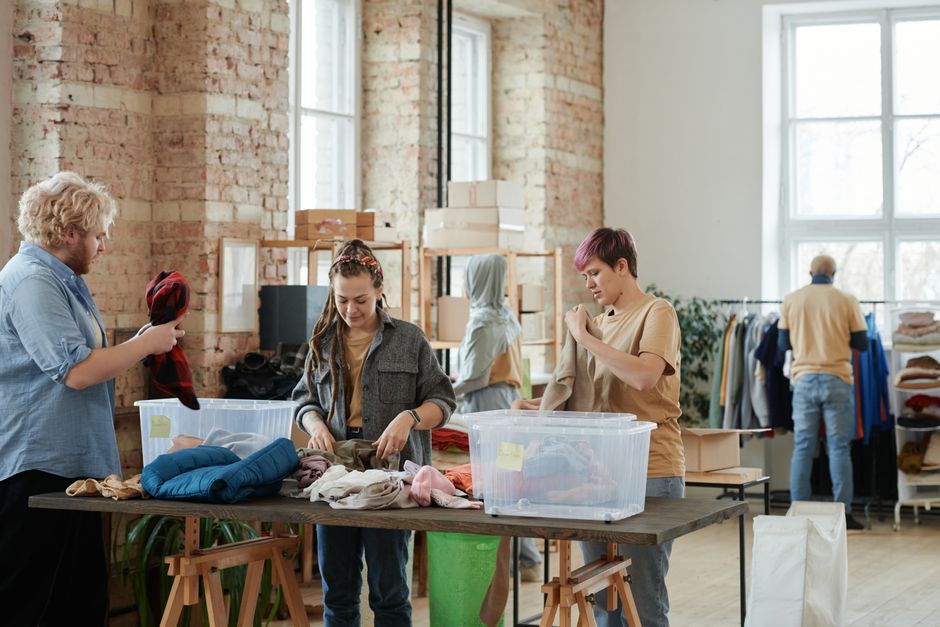
Secondhand shopping creates a useful pause. You have to search, check measurements, inspect fabric, and decide if the item deserves space. That extra work cuts impulse buying. The clothes may not look as polished on the rack, but the process produces a more deliberate closet.
What Secondhand Clothing Saves in a Typical Wardrobe
The strongest case for secondhand clothing is not moral perfection. It is value. You can buy better fabrics, recognizable construction, and harder-to-find pieces for less than their original retail price. The savings become clearer when you compare the full purchase, not just the label.
| Wardrobe item | Typical new fast-fashion spend | Typical secondhand spend | Common extra cost |
|---|---|---|---|
| Everyday blouse | $18-$35 | $10-$25 | $5-$15 for laundering or pressing |
| Office trousers | $35-$70 | $20-$45 | $10-$25 for hemming |
| Wool coat | $120-$250 | $55-$150 | $15-$35 for cleaning |
| Leather handbag | $60-$180 | $30-$110 | $10-$30 for conditioning |
Why the savings are not automatic
Secondhand does not mean every price is fair. Popular labels can carry inflated resale prices, and vintage tags do not guarantee quality. Add shipping, cleaning, alterations, or a return fee, and a supposedly cheap item can approach the cost of a new sale item. My rule is to compare the finished cost with the best new alternative before paying.
The better value calculation
Use cost per expected wear: purchase price plus care or alteration costs, divided by the number of times you expect to wear the piece. A $70 used coat that needs $25 cleaning can still beat a $40 trendy jacket if you wear it for three winters. Bottom line: secondhand saves money when you buy useful pieces, not random bargains.
My Three-Rule Test for Buying Used Clothes
I stopped treating thrift shopping like a treasure hunt. Now every item has to pass three tests before it comes home.
- Check the fabric and construction first. Look for natural fibers, dense stitching, secure buttons, finished seams, and a lining that lies flat. A used Levi’s 501 jean in sturdy denim at $25-$60 is a better bet than a thin $20 trend jean that loses its shape after a month. A label helps, but the fabric and condition make the final decision.
- Set a firm finished-cost ceiling. Include cleaning, tailoring, shipping, and any missing button or zipper repair. I will pay up to $120 for a used wool coat that fits perfectly and needs only cleaning. I will not pay $90 for a damaged coat because the original label once sold it for $400.
- Name three outfits before buying. If the item works with shoes, bottoms, and layers already in the closet, it has a job. If it needs a new bag, special bra, different shoes, and a second purchase to look right, leave it behind. Take a photo of the item and wait one day when shopping online.
These rules also prevent a common mistake: confusing rarity with personal style. A vintage print can be unusual and still never leave the closet. The best secondhand purchase is the piece you can wear next week without changing your whole wardrobe.
When Secondhand Is the Wrong Choice
Secondhand clothing is not the right answer for contaminated items, badly damaged footwear, unsafe children’s gear, or pieces that require more repair than you can realistically complete; for underwear, swimwear, and heavily worn activewear, a new item may offer better hygiene and fabric performance, while a new basic from Uniqlo or Old Navy can be the smarter choice when the secondhand version costs nearly the same and you need it immediately; skip resale when the measurements are missing, the seller refuses close-up photos, or the return terms are unclear, because a low sticker price does not protect you from a poor fit; for most coats, denim, bags, knitwear, and occasion clothing, however, secondhand remains my clear pick because inspection lowers the risk and the price leaves room for cleaning or tailoring.
How to Inspect Secondhand Clothes Before You Pay
Online photos hide the flaws that matter most. A serious secondhand buyer needs a repeatable inspection routine, especially for expensive garments.
Q: What should I inspect first?
Start at stress points: underarms, crotch seams, pocket edges, cuffs, collar, waistband, and the area beneath a handbag strap. Look for shiny patches, pulled threads, moth holes, deodorant marks, pilling, and fabric thinning. Check every zipper and snap. On a Patagonia Better Sweater, for example, moderate fleece pilling may be cosmetic, but a broken zipper or compressed cuffs can change the value of a $60-$120 used purchase. Ask for a photo of the care label and fiber content.
Q: How can I reduce fit mistakes?
Ignore the size label and compare measurements with a garment you already wear. For a jacket, measure pit to pit, shoulder width, sleeve length, and back length. For trousers, check the actual waist, rise, inseam, and thigh. A COS wool coat listed at $90-$180 can be a strong buy only if the shoulder and sleeve measurements work; tailoring cannot make a narrow shoulder wider.
Q: When should I walk away?
Walk away from vague descriptions, stock photos only, missing fabric details, strong perfume, visible water damage, and sellers who will not answer basic questions. A Reformation dress at $70-$160 is not a bargain if the lining is torn or the original fit depended on a missing belt. My clear verdict: condition and measurements matter more than the brand name.
Why the Resale Math Beats an Impulse Purchase
The financial advantage of secondhand clothing comes from slowing down the purchase cycle. A fast-fashion haul spreads its cost across many small decisions, so the shopper notices each item but not the total. Resale shopping makes the search more deliberate, which lowers the number of purchases and raises the chance that each garment has a real use.
The budget test
Set a monthly clothing budget and divide it into planned replacements, alterations, and optional finds. If you have $150, spending $110 on a used wool coat and $25 on cleaning may be wiser than buying six $20 trend pieces. Leave $15 unspent rather than filling the gap with a weak purchase. That unused amount is part of the savings.
The fee and interest trap
Cash purchases of secondhand clothes have no APR, but financing can erase the savings. Some buy-now-pay-later plans advertise 0% APR for short promotional periods, while longer plans or missed payments may reach roughly 20%-36% APR and add fees around $7-$15, depending on the provider and account terms. A $60 resale purchase should not become a $75 problem because the payment schedule encouraged another order.
Also watch for platform shipping charges, cleaning costs, alteration fees, and return postage. Bottom line: pay cash, calculate the finished cost, and keep the item only if it solves a real wardrobe problem.
What Changed After I Left Fast Fashion Behind
My strongest recommendation is to make secondhand your first search, not your only option. That small change removed the pressure to be perfect while still cutting most impulse purchases. I now search resale listings for coats, denim, leather bags, wool sweaters, and event clothing. I buy new when hygiene, performance, or immediate availability matters.
The closet became easier to use
After several months, I had fewer clothes but more combinations. The closet stopped filling with pieces bought for one photo or one night out. I also started keeping a small repair budget, usually $20-$40 per month, for buttons, hems, and cleaning. Those fees feel more visible than a quick online order, but they keep good clothes in rotation.
The rule I kept
Before my switch, I opened a shopping app after seeing a trend and asked how to justify the purchase. Now I ask what gap the garment fills, how often I will wear it, and what the finished cost will be. That question took me back to the same crowded closet that started the change, but this time I could see the solution: buy fewer pieces, inspect them closely, and let secondhand clothing earn its place.