
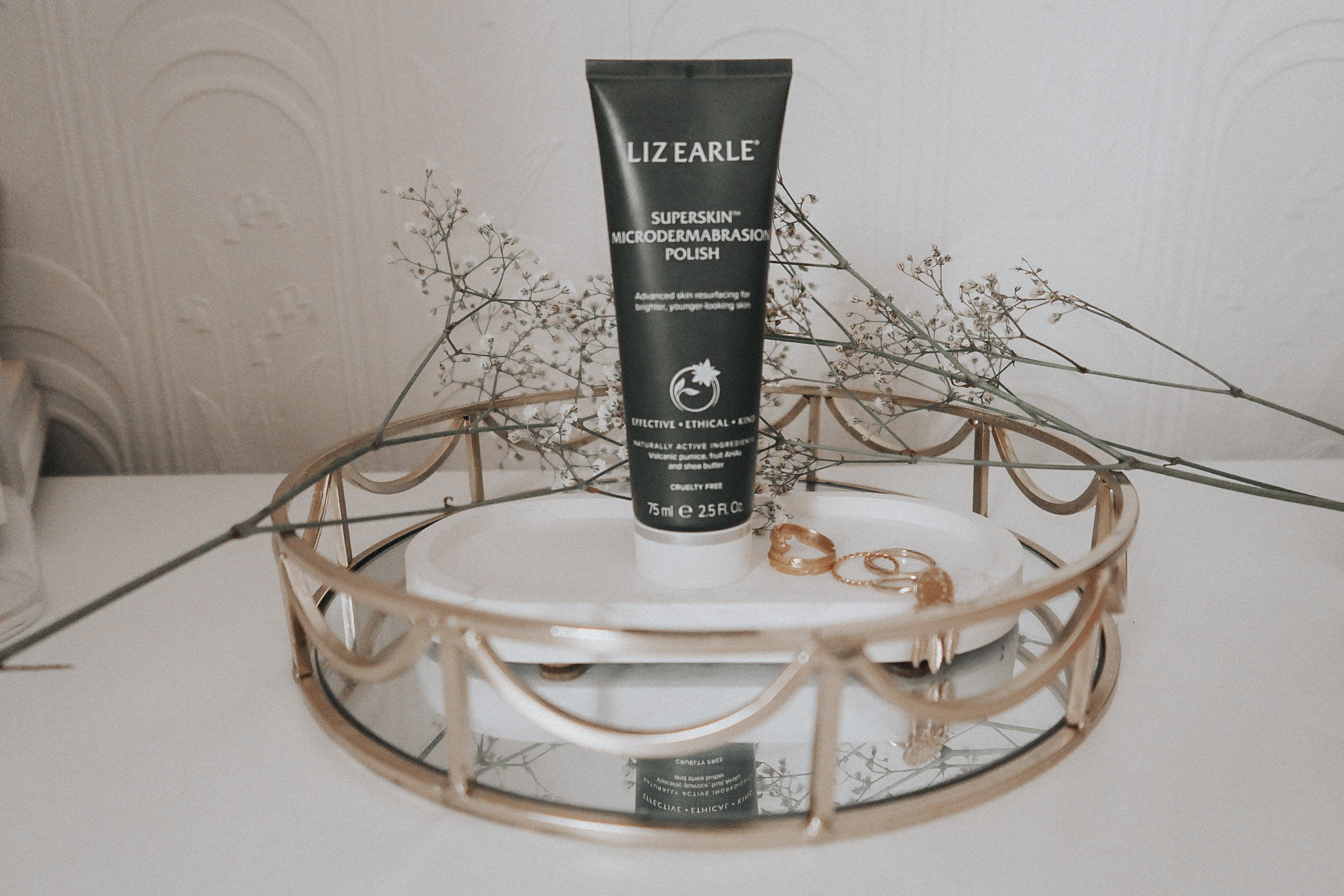
Most people buying this think they’re getting a professional microdermabrasion treatment in a tube. They’re not. That’s the first thing worth clearing up before spending £34 on 50ml of face scrub.
The Liz Earle Superskin Microdermabrasion Polish is a physical exfoliant with aluminium oxide crystals. It exfoliates. It does that well. But the word “microdermabrasion” on the label is marketing language borrowed from a clinical procedure that uses a diamond-tipped wand and suction at intensities this product cannot replicate. Knowing what this polish actually is makes it much easier to judge whether it belongs in your bathroom cabinet.
What “Microdermabrasion” on a Skincare Label Actually Means
Professional microdermabrasion is a clinical treatment. A dermatologist or aesthetician uses an abrasive tip — diamond or crystal — combined with vacuum suction to remove the outermost layer of skin. Sessions run £60–£150 per visit. Results are measurable: reduced hyperpigmentation, smoother texture, visibly minimised pores. There is typically some downtime and post-treatment redness involved.
At-home “microdermabrasion” products borrow the crystal technology — typically aluminium oxide — but skip the suction and clinical intensity entirely. What you get is a fine, uniform physical scrub. Not the same thing. But not useless either.
The Liz Earle version uses aluminium oxide microcrystals alongside chamomile extract, aloe vera, and wheat germ oil. Aluminium oxide is chemically inert — it does not react with skin, which is why it is preferred over older crystal types like sodium bicarbonate that can dissolve unevenly mid-application. Particle size is what separates effective scrubs from damaging ones: too coarse and you cause microtears in the skin; too fine and nothing happens at all. Liz Earle’s formulation sits in the moderate range, which is the correct call for a facial product aimed at general use.
The texture is thick, slightly paste-like. Apply to damp skin, work in small circular movements for about 30 seconds, then rinse thoroughly. The grit is noticeable but not aggressive — fine enough that you are not dragging your skin, coarse enough that the exfoliation is real.
One ingredient worth flagging: there is a light fragrance in this formula. That is a genuine consideration if you have reactive or rosacea-prone skin. Fragrance does not automatically disqualify a product, but it does mean fragrance-sensitive skin types should patch test first — something Liz Earle acknowledges in their FAQ but does not exactly front and centre on the product page.
The marketing claim is “professional-level results at home.” Strip the hyperbole: this is a well-formulated physical exfoliant with a reliable aluminium oxide delivery system. That is legitimately useful. Just not the same as a clinical treatment, and not worth confusing the two.
What aluminium oxide actually does to skin
Aluminium oxide crystals work via mechanical abrasion — they physically dislodge dead skin cells from the stratum corneum, the outermost layer. Unlike chemical exfoliants such as AHAs and BHAs, they do not penetrate below the surface. They buff. This makes the result predictable: you feel the exfoliation immediately, and there is no ongoing chemical reaction once you rinse off. No waiting, no sensitivity window, no risk of going deeper than intended.
Physical vs. chemical exfoliation: picking the right tool
Physical versus chemical is not a question of which is better — it is a question of what you are trying to fix. Physical scrubs like the Superskin Polish deliver immediate, visible surface results. Chemical exfoliants like the Paula’s Choice Skin Perfecting 2% BHA Liquid Exfoliant (£30 for 118ml) work inside the pore lining and continue working after you rinse. For quick radiance before an event, a physical polish is the right call. For persistent congestion, enlarged pores, or blackheads, a BHA wins every time. These are different tools for different jobs.
How the Superskin Polish Compares to the Real Alternatives
The Liz Earle Polish sits in the mid-to-premium range for physical face exfoliants. It is not the cheapest option, and it is not the most technically advanced. Here is what the market actually looks like at comparable price points:
| Product | Price | Exfoliation Type | Best For |
|---|---|---|---|
| Liz Earle Superskin Microdermabrasion Polish | £34 / 50ml | Physical (aluminium oxide) | Dull skin, uneven texture, normal to dry |
| Dermalogica Daily Microfoliant | £65 / 74g | Physical + enzyme + salicylic acid | Congested pores, oily or combination skin |
| Paula’s Choice 2% BHA Liquid Exfoliant | £30 / 118ml | Chemical (salicylic acid) | Blackheads, acne-prone, oily skin |
| The Ordinary Glycolic Acid 7% Toning Solution | £9 / 240ml | Chemical (AHA) | Budget brightening, general exfoliation |
| Elemis Papaya Enzyme Peel | £49 / 50ml | Enzymatic | Sensitive skin, zero friction exfoliation |
At £34 for 50ml, with a pea-to-almond-sized squeeze per application used twice weekly, a tube lasts roughly 6–8 weeks. That works out to around £4–5 per month of regular use — reasonable for the mid-market skincare bracket.
The Dermalogica Daily Microfoliant at £65 is the more technically complete product. It combines physical rice bran exfoliation with papain enzyme activity and salicylic acid, making it meaningfully more effective for oilier, congested skin types. If blackheads or sebum-heavy pores are your main concern, the extra £31 is worth spending. The Liz Earle Polish does not compete in that lane.
At the budget end, The Ordinary Glycolic Acid 7% at £9 is extraordinary value — but it is a toner, not a scrub, and works differently. It is better compared to an AHA serum than to a physical exfoliant.
Bottom Line: For surface texture and radiance improvement on normal-to-dry skin, the Liz Earle Polish is solid value. For congestion, acne, or oily skin, the Dermalogica Daily Microfoliant or Paula’s Choice BHA is the better spend — full stop.
Step-by-Step: Using the Polish Without Wrecking Your Skin Barrier
The most common mistake with physical exfoliants is not the product itself — it is the application. Too much pressure, too often, on the wrong skin conditions. Here is exactly how to use the Superskin Polish correctly:
- Start on clean, damp skin. Wet skin reduces friction significantly. Applying to dry skin increases abrasion and the risk of micro-tears.
- Use a pea-sized amount only. More product does not equal more exfoliation. It equals waste and a messier rinse.
- Apply with fingertip pressure in small, circular movements. Let the aluminium oxide crystals do the work. Pressing down hard adds nothing useful except potential damage to your barrier.
- Work for a maximum of 30 seconds. Focus on the forehead, nose bridge, and chin where dullness typically concentrates. Avoid the under-eye area entirely — the skin there is too thin for physical abrasion.
- Rinse thoroughly with lukewarm water. Crystal particles left on skin cause irritation. Make sure nothing is sitting in hairline or brow creases.
- Apply moisturiser immediately. Post-exfoliation skin is primed for absorption. This is the moment a hydrating serum or moisturiser works hardest. Do not skip it.
- Use a broad-spectrum SPF the next morning. Freshly exfoliated skin is more UV-vulnerable. If you are not already using daily SPF, physical exfoliation without it is counterproductive — you are accelerating cell turnover and then leaving new cells unprotected.
On frequency: Liz Earle suggests 2–3 times weekly. For dry or sensitive skin, once weekly is the right starting point. For normal skin that handles exfoliation comfortably, twice weekly is the ceiling — not the default. And never use this product on active breakouts, open skin, sunburn, or eczema flares. Abrasion on compromised skin barriers makes those conditions worse, not better.
Who Should Skip This Product Entirely
If you have rosacea, chronic eczema, or skin that regularly reacts to new products, do not buy this. Physical exfoliants — regardless of how finely milled — aggravate inflammatory skin conditions. The Elemis Papaya Enzyme Peel (£49) or The Ordinary Glycolic Acid 7% Toning Solution (£9) both deliver meaningful exfoliation without the friction risk that makes this product a liability for reactive skin types.
Same verdict if your primary skin concern is acne. Scrubbing active breakouts spreads bacteria and pushes inflammation deeper into the skin. Salicylic acid — specifically something like the Paula’s Choice 2% BHA — is the correct tool for that situation. The Superskin Polish is not.
What You Are Actually Paying For at £34
The honest answer: part formula, part brand equity. The Liz Earle name carries a premium built on decades of British skincare credibility and strong retail placement across John Lewis, Boots, and its own website. Consistent quality control and packaging that does not feel like a compromise are genuine parts of the value proposition. But the formula itself is not exceptional — it is reliable and correctly assembled, which is different from innovative.
At the bottom of the market, the St. Ives Fresh Skin Apricot Scrub costs around £5 in Boots. It is technically a physical exfoliant, but uses crushed walnut shell particles with irregular, jagged edges. Multiple dermatologists have raised concerns about walnut shell scrubs causing micro-tears in facial skin. That is where cutting costs creates a genuine problem rather than a sensible saving.
A more competitive alternative at a similar price point: the REN Clean Skincare Glycol Lactic Radiance Renewal Mask at £35 for 50ml. It combines lactic acid (AHA) with physical exfoliation, meaning the AHA component continues working below the surface after you rinse. For normal-to-combination skin types, that dual-action approach arguably delivers more per pound than a physical-only scrub.
The Liz Earle Polish’s honest case is this: if you specifically want a physical-only exfoliant with reliable aluminium oxide technology, no synthetic microbeads, and a pleasant, non-clinical application experience, this product delivers on all three. It will not surprise you, and it will not disappoint. It is simply not trying to be anything more than a well-made physical scrub — and on those terms, it succeeds.
This is not dermatological advice. If you have a diagnosed skin condition, consult a qualified dermatologist before introducing any exfoliant into your routine.
Bottom Line: Worth buying if you already prefer physical exfoliants and want a step above drugstore options. Not worth buying if your main concern is congestion, acne, or reactive skin.
The Questions Most Superskin Polish Reviews Do Not Answer
Can I use this on the same night as retinol or an AHA?
No. Layering physical exfoliation on top of a retinol or acid application over-exfoliates the skin barrier. The outcome is redness, increased sensitivity, and sometimes a breakout cycle — the opposite of what you are trying to achieve. Keep these on entirely separate days. A workable weekly structure: Superskin Polish on Monday and Thursday, retinol or AHA on Tuesday and Friday, rest days Wednesday and the weekend.
Does it actually minimise pores?
No product permanently minimises pore size. Pore dimensions are largely determined by genetics and sebum production — structural factors that topical products do not change. What the Superskin Polish does is remove debris and dead skin from around the pore opening, which makes pores appear temporarily smaller and less visible. That is a real, visible effect. But any brand claiming permanent pore reduction is selling marketing language, not a physiological result.
How quickly will results show up?
Texture improvement and an immediate radiance boost typically appear after the first use. That is the signature payoff of physical exfoliation — surface cells are removed right away and skin reflects light more evenly. For meaningful improvement in longer-term concerns like post-inflammatory hyperpigmentation or fine lines, consistent use over 6–8 weeks is the realistic minimum. Physical exfoliants alone will not shift stubborn pigmentation — pairing this with a vitamin C serum or a niacinamide treatment will accelerate that outcome considerably.
Is the 50ml size worth committing to, or should I test it first?
Liz Earle sells the Superskin Polish in 50ml only — there is no travel or trial size available as of 2026. At twice-weekly use, a tube lasts 6–8 weeks. If you are seeing clear improvement in skin texture after the first four weeks of correct use, the product suits your skin and the commitment is justified. If you see no change in texture after a full month, the formula is not the right fit — switch to a chemical exfoliant rather than continuing to spend on a physical scrub that is not delivering for your skin type.