A crowded closet can still leave you with nothing to wear. The fix is not more clothing. It is a small group of pieces that work across your real week, from errands and office hours to dinners and travel.
What counts as a wardrobe essential for women?
A wardrobe essential earns its place by solving more than one dressing problem. It should work with at least three other pieces, suit your regular activities, and feel comfortable enough to wear without constant adjustment. A white shirt that only works with one pair of trousers is not an essential. A simple shirt that works open over a tee, tucked into jeans, or under a jacket has a much stronger claim.
The job test
Start with your calendar, not a mood board. Write down the settings you dress for most often: work, casual days, formal events, exercise, weekends, or travel. Your first essentials should cover the settings that appear every week. A silk evening top may look beautiful, but it should not outrank a dependable layer if you rarely attend formal events.
The repeat-wear test
Ask how often you would wear a piece in a normal month. A practical essential should create at least five outfits before you buy it. Check the fabric, care label, opacity, and fit from the side as well as the front. A garment that needs special washing, constant steaming, or uncomfortable undergarments will not earn the repeat wears its price requires.
The best foundation usually includes a reliable top, a polished layer, one comfortable trouser or jean, a second bottom with a different shape, and a simple one-piece outfit. The exact colors can change, but the function stays the same.
How to choose wardrobe basics that work together
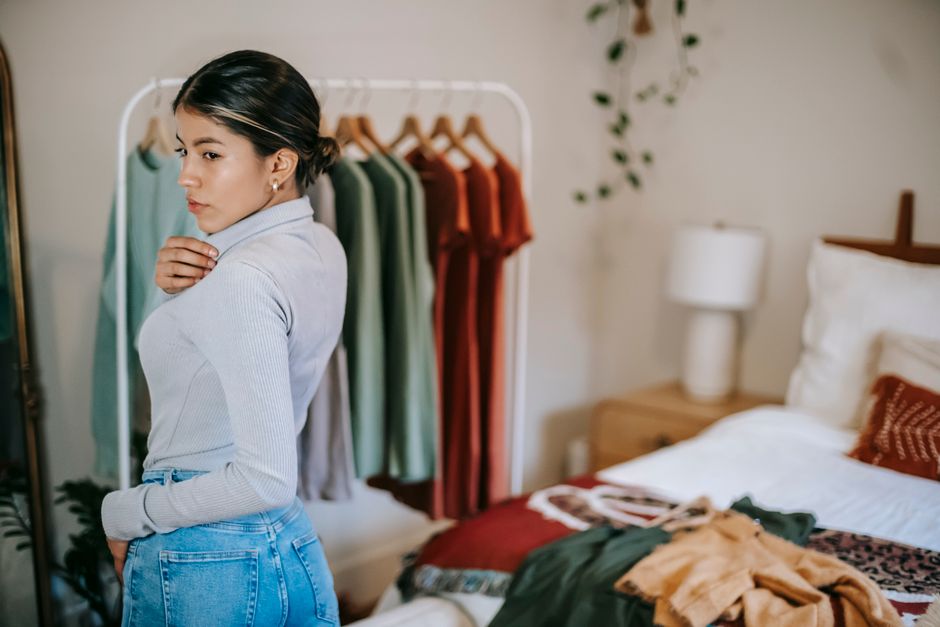
Build from a controlled color base, then add texture and shape. This makes a small closet feel larger because each item can move between outfits instead of staying trapped in one combination.
Use the three-color base
Choose two neutral colors and one accent before shopping. Black and cream create a clean base; navy and camel feel softer; brown and white suit warm wardrobes. Add one accent such as burgundy, cobalt, olive, or red. Avoid buying five unrelated colors and hoping they will coordinate later.
- Choose one everyday top in a neckline and sleeve length you already wear. Fit matters more than a trendy detail.
- Choose one bottom with enough room to sit, walk, and climb stairs. If you adjust the waistband all day, it is the wrong essential.
- Add a second bottom with a different visual line. Pair a straight jean with a fluid trouser or a fitted skirt.
- Select one layer that changes the formality of an outfit. A cardigan feels relaxed; a tailored jacket looks sharper.
- Test every purchase against three existing items. If you cannot name the combinations quickly, leave it in the fitting room.
Use the one-in, one-out rule for categories that already feel full. When a new shirt enters, an unworn shirt leaves. This keeps the wardrobe useful instead of turning storage space into a record of optimistic intentions.
Which wardrobe essentials are worth buying first?
The best buying order starts with the item you will wear most, then adds pieces that expand its range. Prices below are listed US prices found during the 2026 check and may change with sales, color, or size availability.
| Essential | Specific example | Useful detail | Listed price | Best first use |
|---|---|---|---|---|
| Everyday tee | UNIQLO SUPIMA Cotton T-Shirt | Cotton jersey, sizes XXS–XXL | $19.90 | Jeans, trousers, skirts, layering |
| Light knit | UNIQLO Extra Fine Merino Crew Neck Sweater | 100% 19.5-micron Merino wool | $49.90 | Office layers and cool-weather outfits |
| Everyday jeans | Levi’s 501 Original Fit Women’s Jeans | High rise around 10.85 inches, straight leg | $110 regular price | Casual outfits and weekend wear |
| Polished jacket | COS Fluid Wool-Voile Blazer | Fluid tailoring with a clean silhouette | $249 | Work, dinners, and smart casual dressing |
For most shoppers, the UNIQLO SUPIMA Cotton T-Shirt is the smartest first purchase because its low price and simple shape let you test your color plan cheaply. The UNIQLO Merino sweater comes next if you need layers, while the Levi’s 501 earns priority for a denim-heavy lifestyle. The COS blazer is the strongest finishing piece, but it should come later unless you dress for polished settings several times a week.
Do not treat the table as a mandatory shopping list. A wardrobe essential must match your life. If denim feels restrictive, replace jeans with a straight-leg trouser. If your workplace is casual, a soft overshirt may work harder than a blazer.
Which single pieces give the biggest outfit return?

Start with the UNIQLO SUPIMA Cotton T-Shirt in white, black, or navy: it gives the most outfit return per dollar because it works alone, under knitwear, beneath tailoring, and with both casual and polished bottoms; choose a slightly substantial cotton fabric so it does not cling or turn transparent. For the first bottom, the Levi’s 501 Original is the clearest pick for shoppers who want a straight, high-rise shape that balances fitted tops and relaxed layers, but skip it if rigid denim feels uncomfortable and buy a softer stretch trouser instead. Add the COS Fluid Wool-Voile Blazer only when you need instant polish, because its $249 price makes sense for frequent office, dinner, or presentation wear, while a washable cardigan is the better value for a mostly casual closet.
How should women test a new wardrobe essential?

Try the piece through a short home wardrobe audit before removing the tags. Three questions catch most expensive mistakes.
Does it make three complete outfits?
Style it with three different bottoms or layers already in your closet. Photograph the outfits in daylight. If all three looks require another purchase, the item is not solving a wardrobe gap; it is creating a shopping chain.
Can you wear it for four real hours?
Sit, bend, walk, raise your arms, and check the fabric after movement. Look for tight armholes, a rolling waistband, scratchy seams, gaping buttons, or a hem that shifts. Comfort is not a bonus. It decides whether a garment becomes a favorite or stays on a hanger.
What happens when it needs care?
Read the label before buying. A machine-washable top fits a busy week better than a delicate garment that needs frequent dry cleaning. Also check shrinkage risk, color transfer, and whether the fabric wrinkles during normal use. A small wardrobe works when its pieces survive real routines, not just a bright fitting-room mirror.
That approach brings you back to the original problem: a closet full of clothes but no easy outfit. Choose fewer pieces, test them against your actual schedule, and build outward only when the next item clearly increases the number of outfits you can wear.